Sidewalks, ADA ramps, parking pads, dumpster pads, and approach slabs — what property managers and general contractors should plan for before the pour.
Commercial concrete has to perform every day.
Sidewalks accommodate employees, customers, tenants, and deliveries. Parking and equipment pads support repeated use. Approaches connect different areas of a property. Exterior flatwork also contributes to the first impression visitors have of a business or development.
For property managers, general contractors, builders, and business owners in Fort Collins and throughout Northern Colorado, choosing the right commercial concrete contractor involves more than finding someone who can pour a slab.
Planning, preparation, scheduling, drainage, project specifications, access, and finish quality all matter. Here is what to consider before starting your next commercial concrete project.
What Is Commercial Concrete Flatwork?
Flatwork generally refers to horizontal concrete surfaces installed on a prepared base. Commercial flatwork can include:
- Sidewalks
- Pedestrian pathways
- ADA ramp areas
- Parking pads
- Dumpster pads
- Approach slabs
- Concrete entries
- Equipment or utility pads
- Concrete steps and related site improvements
- Replacement sections of deteriorated flatwork
The exact requirements vary according to the property, intended use, plans, and project specifications. Commercial projects may also require coordination with other trades, site managers, tenants, customers, or ongoing operations.
Why Commercial Concrete Requires Careful Planning
A residential concrete project may affect one household. Commercial work can affect an entire property's operations.
Access may need to remain open for employees, residents, customers, deliveries, and emergency routes. Other contractors may also be working around the concrete schedule.
Before work begins, the contractor and project stakeholders should establish the scope, access requirements, demolition needs, preparation requirements, pour sequence, and anticipated schedule. Clear expectations before mobilization can help reduce avoidable disruptions once work is underway.
Commercial Sidewalks and Pedestrian Areas
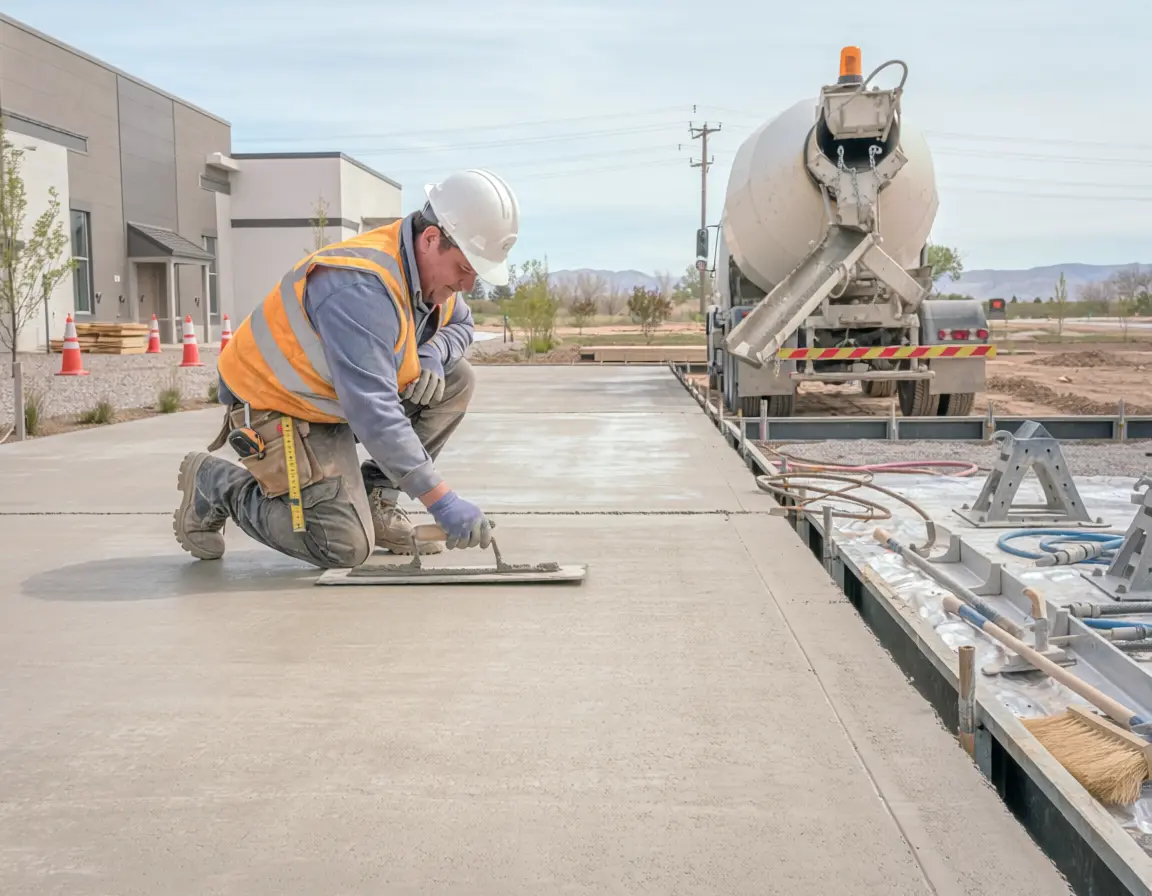
Sidewalks are among the most visible types of commercial concrete flatwork. They help connect parking areas, entrances, buildings, public pathways, and other parts of a property.
Quality sidewalk work starts below the finished surface with appropriate removal where required, site preparation, base work, grading, reinforcement when specified, and thoughtful joint placement. Drainage and transitions between adjoining surfaces also deserve careful attention.
For replacement work, the contractor may need to remove isolated damaged sections while protecting the surrounding concrete and landscaping.
ADA Ramp Concrete Work
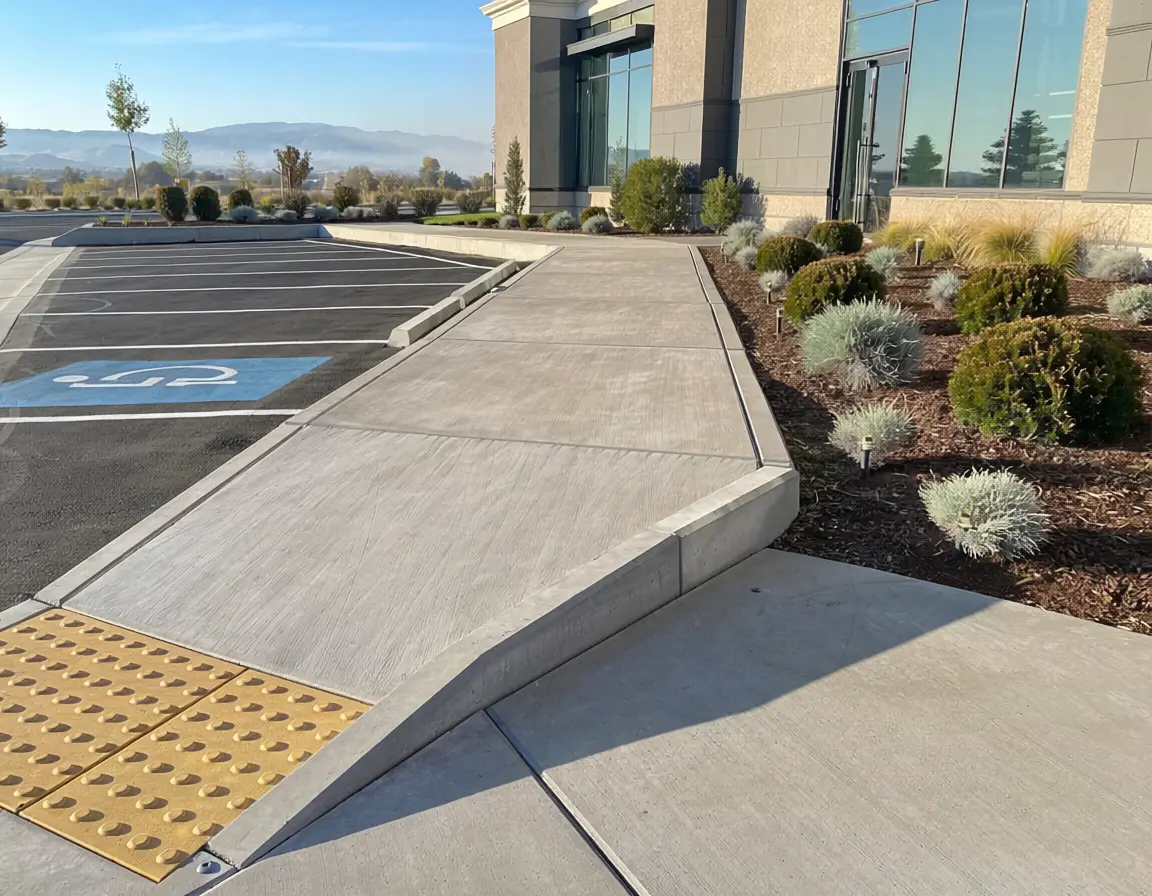
Accessible routes are an important part of many commercial properties. Concrete contractors may be responsible for forming and pouring ramp areas according to the plans and project requirements provided for the site.
Because accessibility requirements involve specific dimensions, slopes, transitions, and related details, the concrete portion should be coordinated carefully with applicable project specifications and responsible design or project professionals.
Accuracy during layout, forming, and finishing is especially important when concrete connects to existing sidewalks, entrances, curbs, or parking areas.
Parking Pads and Approach Slabs
Commercial properties frequently need concrete in areas that experience greater loads or more frequent traffic than a typical backyard slab. Parking pads, approaches, service areas, and similar surfaces should be planned based on their intended use and project specifications.
Important considerations can include:
- Sub-base preparation
- Concrete thickness
- Reinforcement requirements
- Drainage
- Joint layout
- Connections to adjoining pavement
- Vehicle movements
- Expected loads
- Finish requirements
The correct construction approach depends on the project rather than a one-size-fits-all specification.
Dumpster Pads and Service Areas
Dumpster and service areas may look like simple slabs, but they can experience concentrated loads and repeated commercial use. These spaces should be designed and poured according to the project's intended use and specifications.
Placement also matters because the finished area may need to integrate with asphalt, curbs, enclosures, service drives, drainage features, or surrounding concrete. Good coordination during preparation can help create cleaner transitions and a more functional finished site.
The Importance of Commercial Concrete Site Preparation
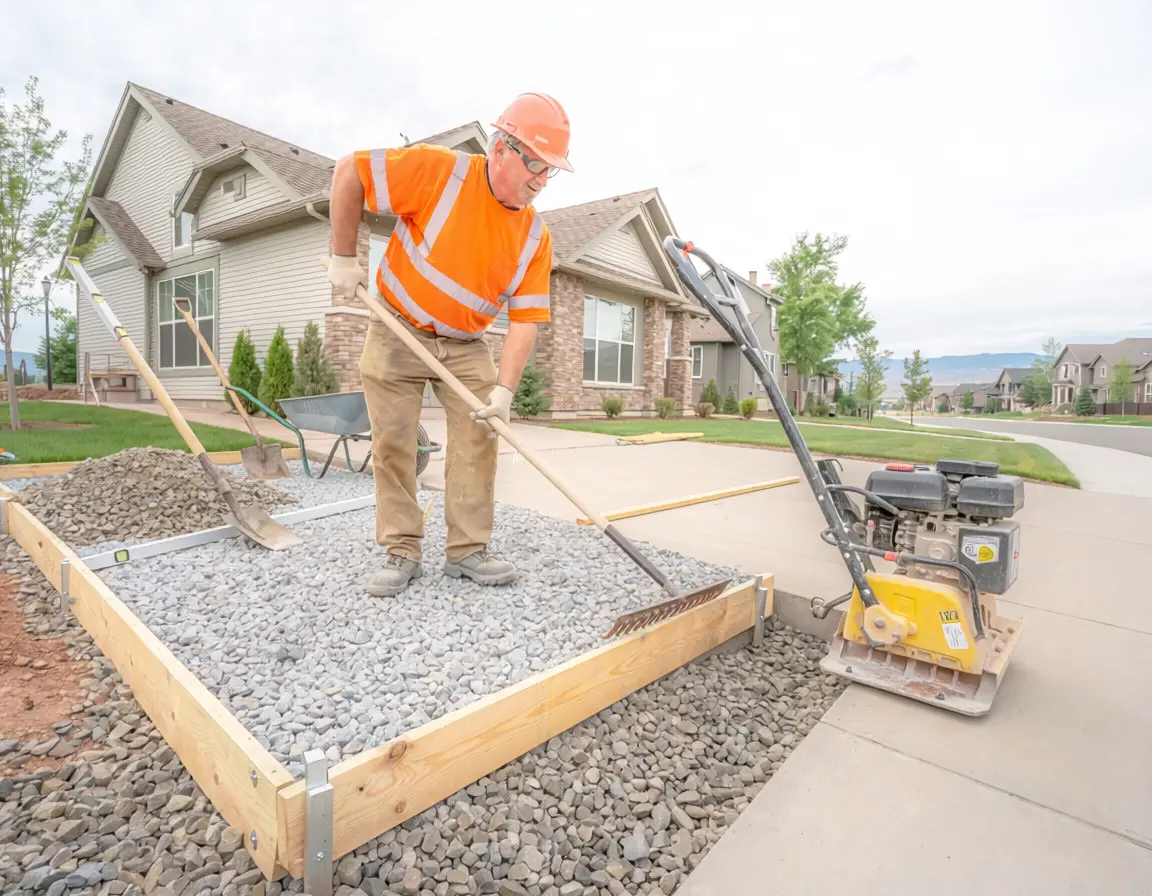
The appearance of fresh concrete can draw most of the attention, but commercial flatwork begins with the condition beneath it. Site preparation may involve:
- Removing damaged or existing concrete
- Hauling away demolished material
- Excavating the installation area
- Establishing grades
- Preparing and compacting the base
- Setting forms
- Installing specified reinforcement
- Confirming elevations and transitions
- Preparing for the scheduled pour
Skipping steps or rushing base preparation can affect the finished project long after the crew leaves. For that reason, commercial clients should ask potential contractors to describe preparation work in their proposal rather than comparing bids based only on the number of square feet being poured.
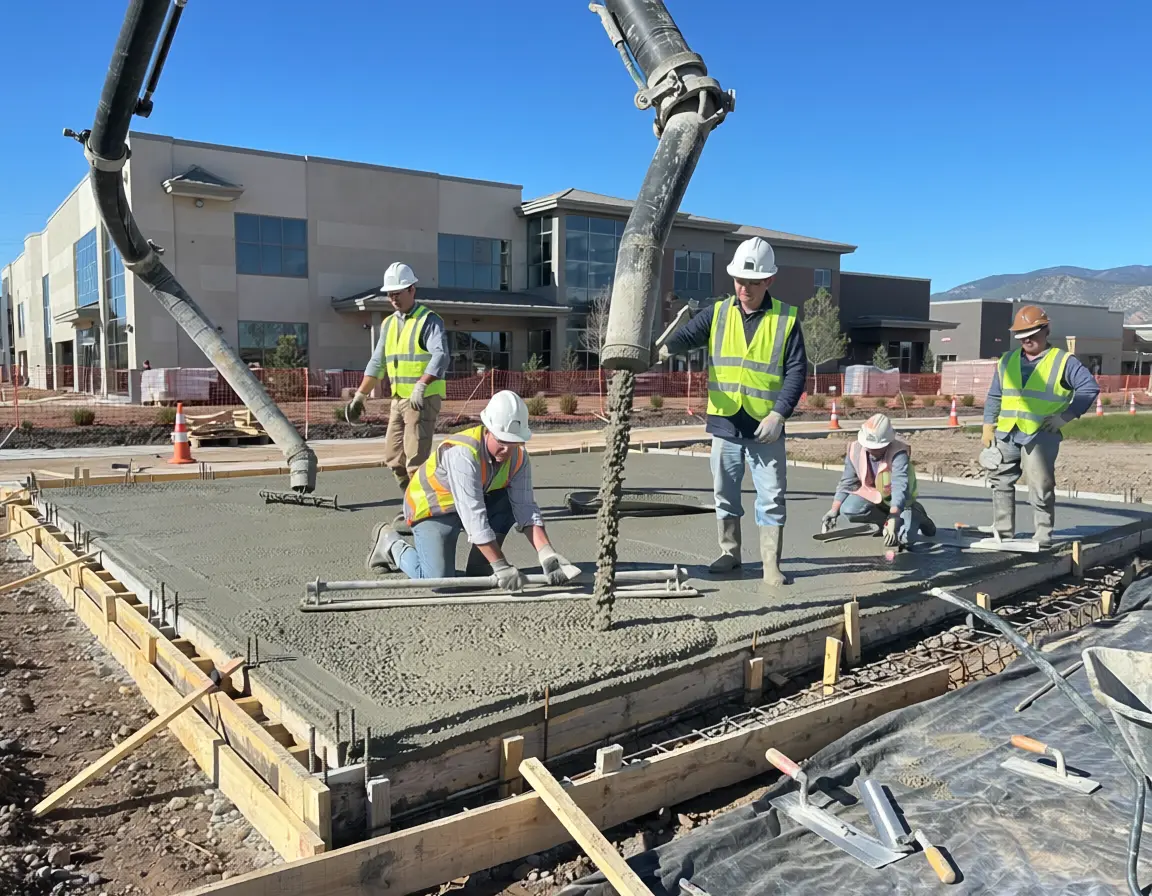
Drainage Should Be Planned Before the Pour
Water management can affect both the new concrete and surrounding portions of a commercial property. Flatwork should integrate appropriately with the site's existing grades, drainage system, pavement, landscaping, structures, and entrances.
Unexpected low areas can collect water and create maintenance concerns. Commercial concrete planning should therefore include elevations and drainage considerations before forms and concrete make changes difficult to correct.
Concrete Removal and Replacement
Not every commercial property needs completely new flatwork. Aging sites often require targeted removal and replacement of deteriorated sections. Common reasons for replacement include:
- Significant cracking
- Settlement
- Uneven transitions
- Surface deterioration
- Changes to property layout
- New construction or tenant improvements
- Redesign of pedestrian or service areas
Careful demolition can help prepare the site for new work while minimizing unnecessary impact on adjacent areas. Working with a contractor capable of handling both removal and replacement can also reduce the number of crews the property manager or general contractor has to coordinate.
Scheduling Commercial Concrete Around Operations
One of the biggest differences between residential and commercial work is scheduling. A business may need to remain open. An apartment community may need to preserve resident access. A construction project may have several trades waiting on the concrete schedule.
Before work starts, discuss:
- Which areas must remain accessible
- Delivery and loading requirements
- Pour sequencing
- Site access for equipment
- Other contractors working nearby
- Temporary closures
- Concrete curing restrictions
- Cleanup and haul-away
A clear schedule makes it easier for property managers, businesses, and contractors to communicate disruptions to everyone affected.
What to Look for in a Commercial Concrete Contractor
Commercial clients should evaluate both concrete workmanship and project management.
Clear Scope
The proposal should identify what is being removed, prepared, poured, and finished.
Understanding of Project Specifications
Commercial concrete needs to match the project's plans and requirements rather than relying on assumptions.
Site Preparation Capabilities
Ask who handles demolition, excavation, grading, preparation, and debris removal.
Communication
Commercial projects often involve multiple stakeholders. Reliable communication helps keep schedules and access changes clear.
Finish Quality
Clean joints, consistent surfaces, properly finished edges, and orderly transitions contribute to a professional final appearance.
Jobsite Organization
A well-managed jobsite is especially valuable when the surrounding property remains occupied or other trades continue working nearby.
One Contractor for Multiple Concrete Needs
Commercial properties frequently need several concrete services at the same time. For example, a project may combine sidewalk replacement with an approach slab, equipment pad, ramp area, or general site flatwork.
Using a full-service concrete crew for multiple portions of the scope can simplify communication and reduce coordination between separate subcontractors. For general contractors and property managers, having a single accountable concrete team may also make scheduling and project updates easier.
Commercial Concrete Across Northern Colorado
Fort Collins continues to include a mix of retail, multifamily, industrial, office, institutional, and construction activity. Nearby communities such as Loveland, Windsor, Timnath, Greeley, Wellington, Severance, Johnstown, and Berthoud also create ongoing demand for dependable commercial property improvements.
Because each site has different access, traffic, grading, and operating requirements, commercial concrete work benefits from an on-site review before pricing and scheduling are finalized.
Request a Commercial Concrete Quote in Fort Collins, CO
Whether your project involves sidewalks, ramp areas, parking pads, approach slabs, dumpster pads, demolition, or other commercial flatwork, preparation and execution matter from the first site visit through final cleanup.
Skyline Concrete & Services provides commercial concrete services for businesses, contractors, builders, and property managers throughout Fort Collins and Northern Colorado.
Contact Skyline Concrete & Services to request a free commercial concrete quote for your Fort Collins, Loveland, Windsor, Timnath, Greeley, or surrounding Northern Colorado project.