A driveway does more than hold cars. Here is how base prep, drainage, joints, and finish choices shape a concrete driveway that lasts through Northern Colorado freeze-thaw cycles.
A driveway has to do much more than provide a place to park. It affects how your home looks from the street, how water drains around the property, and how easily vehicles and pedestrians can move between the street, garage, and home.
For homeowners in Fort Collins and throughout Northern Colorado, the local climate makes proper concrete installation especially important. Seasonal temperature changes and freeze-thaw cycles can be hard on exterior concrete when the base, reinforcement, drainage, joints, or finishing are not handled correctly.
Whether you are replacing an aging driveway or adding concrete to a newer property, understanding what goes into a quality installation can help you make a better long-term investment.
Why Concrete Is a Popular Driveway Choice in Northern Colorado
Concrete is commonly chosen for residential driveways because it combines strength with a clean, finished appearance. When properly installed and maintained, it can handle daily vehicle traffic while improving the overall look of a property.
Homeowners can also choose from several finishing options. A traditional broom finish provides a simple, practical surface, while decorative borders, exposed aggregate, color, or stamped sections can give the driveway a more customized appearance.
Concrete can work especially well for homes throughout Fort Collins, Loveland, Windsor, Timnath, Wellington, and surrounding Northern Colorado communities where homeowners want a driveway that balances durability and curb appeal.
Signs Your Existing Driveway May Need Replacement
Not every crack means an entire driveway has to be replaced. However, widespread damage can eventually reach the point where repeated repairs are no longer the most practical solution.
Large or Widespread Cracks
Small surface cracks can occur in concrete, but numerous cracks or large separated sections may indicate more significant movement below the slab.
The condition of the base beneath a driveway matters just as much as the visible surface. If sections have shifted because of poor compaction, drainage issues, or soil movement, repairing only the surface may not address the underlying problem.
Uneven or Sunken Sections
A driveway that has settled unevenly can create low spots where water collects. Raised or sunken sections can also become inconvenient for vehicles and create potential trip hazards.
Before installing replacement concrete, the site should be evaluated so grading and base preparation can be addressed properly.
Significant Surface Deterioration
Older concrete may develop extensive scaling, chipping, or worn areas. Northern Colorado weather can place additional stress on exterior flatwork, particularly when moisture repeatedly freezes and thaws.
When deterioration affects large portions of the driveway, replacement may provide a cleaner and more consistent result than patching several separate areas.
Drainage Problems
Water should move away from areas where it can cause problems around the driveway, garage, or foundation.
If your existing driveway regularly holds water, the grading and drainage plan should be reviewed before new concrete is poured.
What Makes a Quality Concrete Driveway?
A good driveway is not simply concrete poured into forms. Much of the work that determines long-term performance happens before the concrete truck arrives.
Proper Site Preparation
The installation area must first be excavated and prepared for the new slab. Existing concrete may need to be removed, and unsuitable material may need to be cleared from the site.
A stable, properly prepared surface provides the foundation for everything that follows.
A Well-Compacted Sub-Base
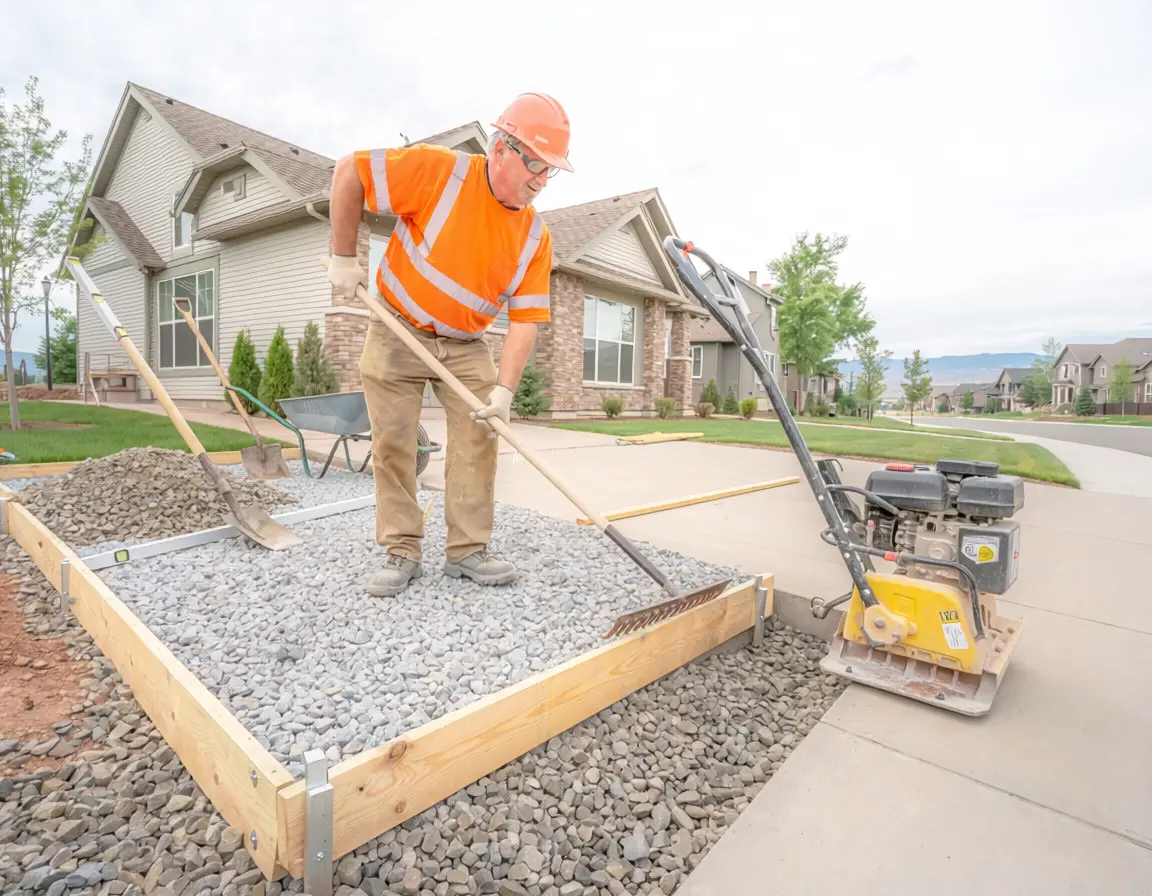
Base preparation is especially important for exterior concrete. A poorly prepared base can contribute to movement and settlement. Proper grading and compaction help create consistent support beneath the slab and reduce the likelihood of avoidable problems later.
Reinforcement
Depending on the project, reinforcement may be incorporated into the driveway design. Your contractor can determine an appropriate approach based on the driveway layout, site conditions, expected use, and project specifications.
Control Joints
Concrete naturally expands, contracts, and experiences stresses over time. Control joints are intentionally placed to help manage where cracking occurs.
Thoughtful joint layout is both a functional and visual part of a professional concrete installation.
Correct Grading and Drainage
Water management should be considered during driveway planning, not after the driveway has already been poured. Proper slope helps direct runoff toward appropriate drainage areas rather than allowing water to collect against structures or in low sections of concrete.
Should You Choose Standard or Decorative Concrete?
A driveway does not have to be purely functional.
Broom-Finished Concrete
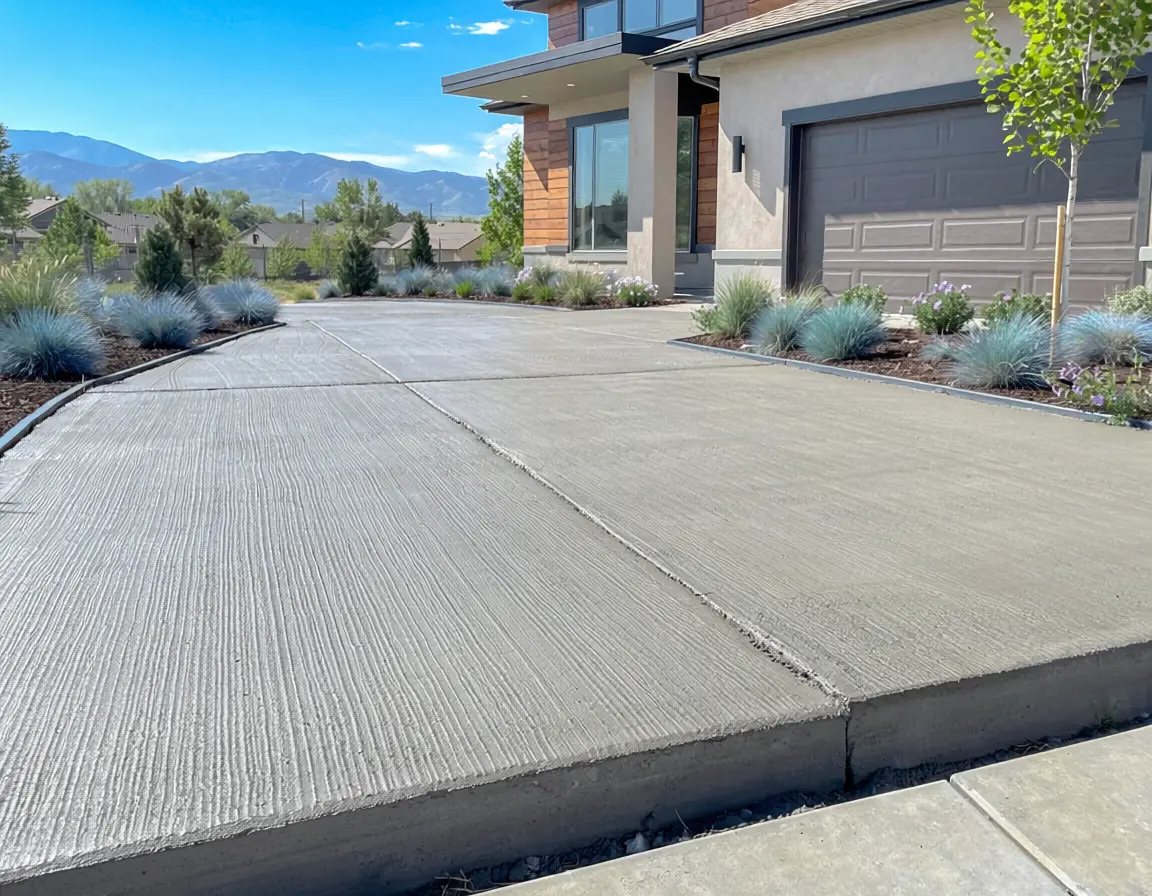
Broom-finished concrete offers a classic appearance and textured surface. It works well for homeowners who prefer a straightforward driveway that complements many architectural styles.
Stamped Concrete
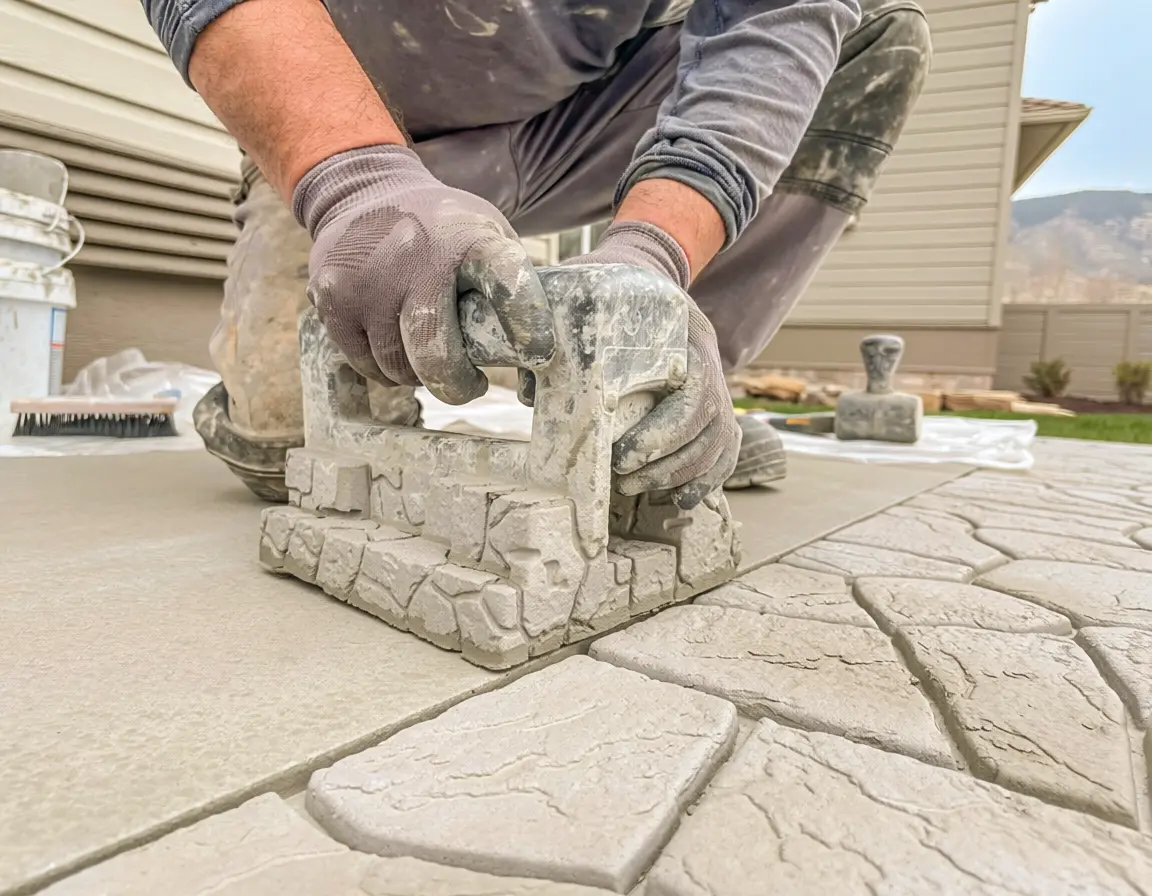
Stamped concrete can reproduce patterns inspired by stone, slate, cobblestone, and other materials. Homeowners may use stamping across larger areas or as decorative accents.
Colored and Decorative Finishes
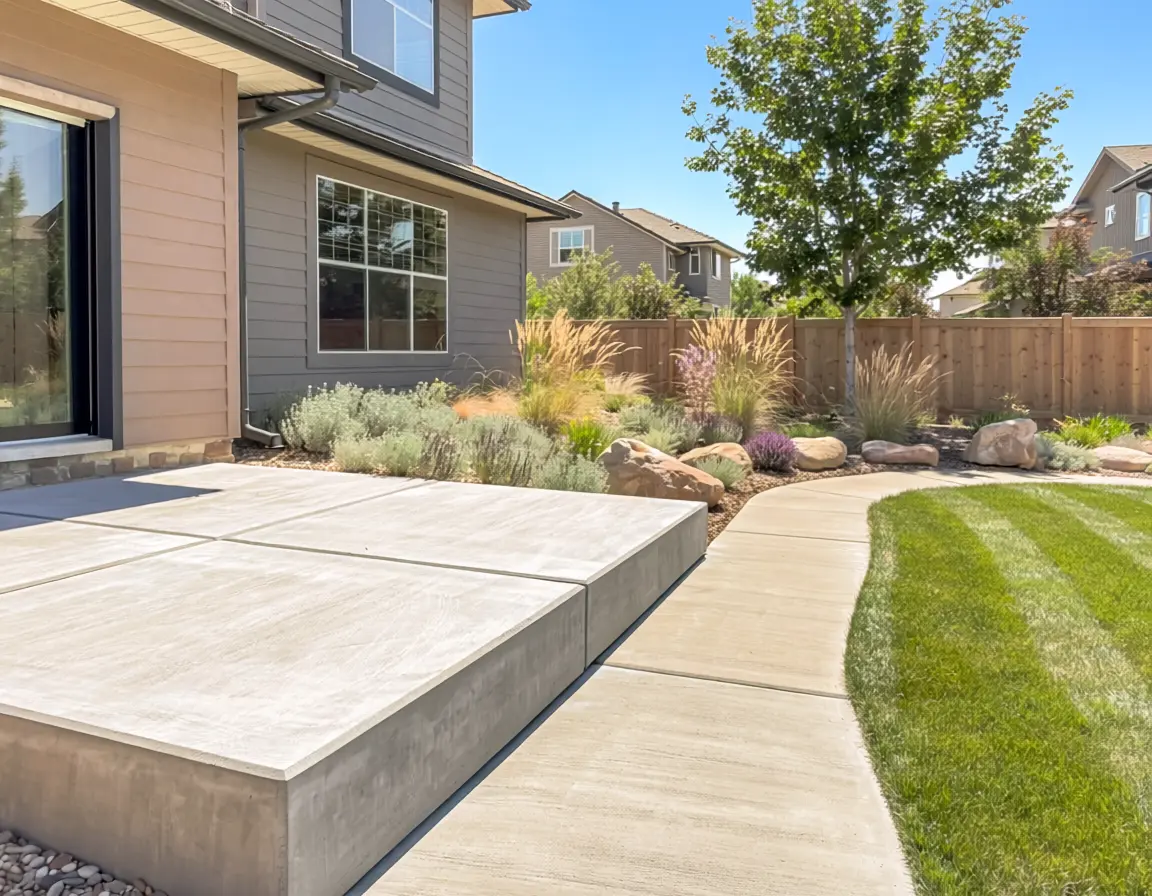
Color, staining, scoring, exposed aggregate, and decorative borders can help coordinate a driveway with patios, walkways, landscaping, or exterior finishes.
If you are already replacing a driveway, it can be a good opportunity to consider how the new concrete fits into the entire front-yard design.
Replacing an Old Concrete Driveway
Driveway replacement generally involves more than breaking up the existing concrete and pouring a new slab. A complete project may include:
- Saw-cutting or breaking out the old concrete
- Removing and hauling away debris
- Excavating where necessary
- Preparing and compacting the sub-base
- Adjusting grades for drainage
- Setting forms
- Installing reinforcement when required
- Pouring and finishing the concrete
- Creating appropriate control joints
- Cleaning the work area
Using one concrete contractor for removal, preparation, pouring, and finishing can simplify coordination and help keep responsibility for the project clear.
How Long Does a Concrete Driveway Project Take?
Every driveway is different. Project timing depends on factors such as driveway size, existing concrete removal, site accessibility, preparation requirements, finish selection, weather, and curing needs.
Homeowners should also remember that finishing the pour does not mean the concrete is immediately ready for normal vehicle traffic. Your contractor should explain the appropriate curing and use timeline for your specific project.
Planning ahead is especially important if driveway work temporarily affects access to your garage or parking area.
Questions to Ask a Concrete Driveway Contractor
Before hiring a contractor for a new driveway, ask how the company plans to approach the entire project rather than focusing only on the final finish. Useful questions include:
- How will the existing driveway be removed?
- What type of base preparation is planned?
- How will drainage be handled?
- Where will control joints be located?
- What finish options are available?
- What reinforcement is appropriate?
- How long should we avoid walking or driving on the new concrete?
- Who handles cleanup and haul-away?
- What is included in the written estimate?
Clear answers help homeowners compare proposals based on scope and workmanship rather than price alone.
Local Concrete Matters in Fort Collins
Northern Colorado properties can vary considerably from one location to another. Established homes in Fort Collins may have different access, grading, landscaping, and replacement needs than newer properties in Timnath or Windsor.
A contractor familiar with the area can evaluate the property itself and recommend an installation approach based on actual site conditions. That local attention is particularly valuable for permanent improvements such as driveways, patios, walkways, and other exterior concrete.
Get a Concrete Driveway Quote in Fort Collins, CO
A well-planned concrete driveway can improve your home's appearance, provide dependable everyday access, and create a cleaner connection between your home and the street.
Skyline Concrete & Services provides residential concrete work in Fort Collins and communities throughout Northern Colorado, including Loveland, Windsor, Timnath, Wellington, Greeley, Severance, Johnstown, Berthoud, and surrounding areas.
If you are considering a new driveway or replacing damaged concrete, contact Skyline Concrete & Services to request a free on-site quote and discuss your project.