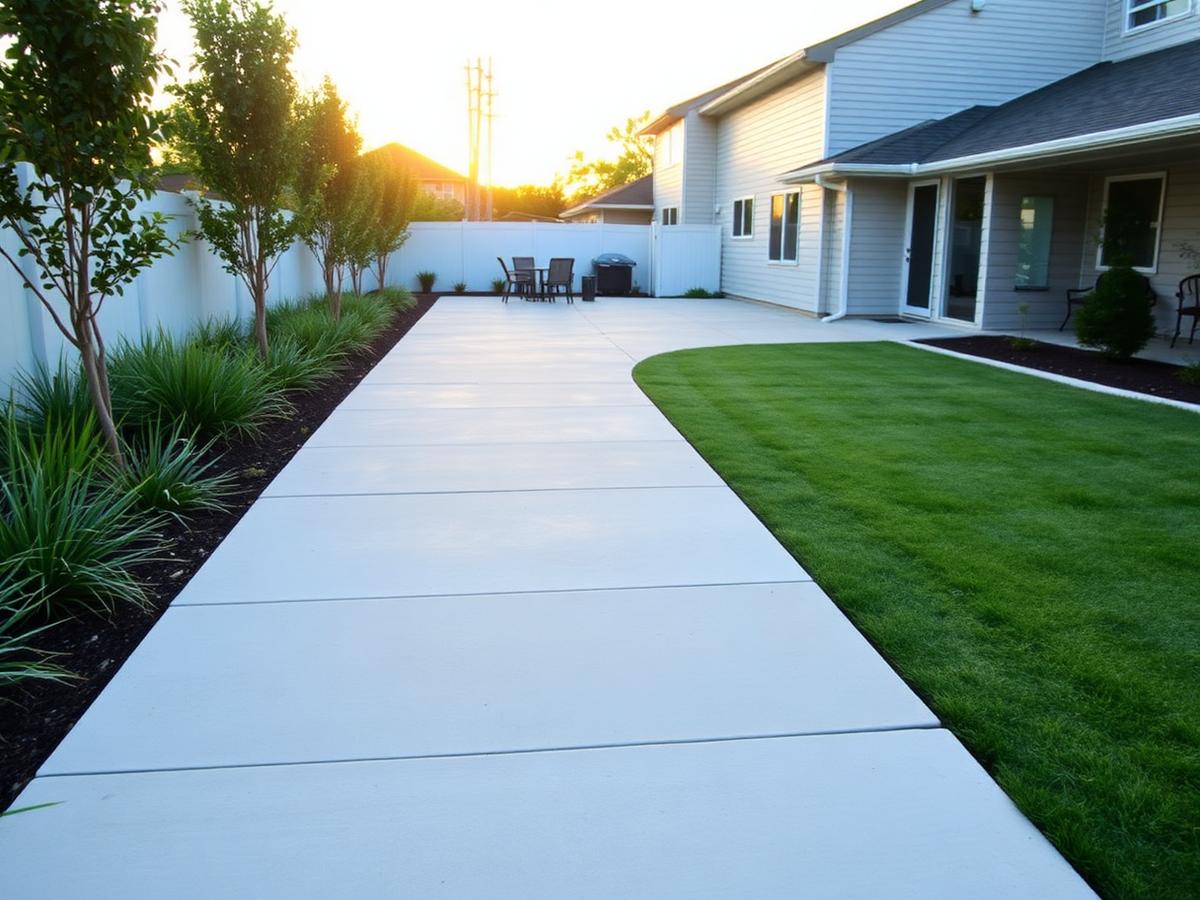
A concrete walkway seems simple until water collects in the wrong place. A path that looks attractive on installation day can become frustrating if it puddles after a storm, directs runoff toward the foundation or creates uneven transitions that are difficult to use.
A concrete walkway seems simple until water collects in the wrong place. A path that looks attractive on installation day can become frustrating if it puddles after a storm, directs runoff toward the foundation or creates uneven transitions that are difficult to use.
For homeowners in Fort Collins and Northern Colorado, a walkway should do more than connect point A to point B. It should match the property, direct surface water appropriately and provide a dependable route through changing weather.
Quick answer: What makes a good concrete walkway? A well-planned path combines suitable width, stable sub-base, appropriate surface texture, intentional control joints and grading that manages water without creating unsafe slopes or sending runoff toward vulnerable structures.
Plan the Route Before Choosing the Finish
Start by watching how people move around the property. A front path should connect naturally to the driveway and entrance. A side-yard walkway should provide enough room for people, trash bins or garden equipment to pass. A backyard path may connect a patio, shed, gate or garden without cutting through every lawn area.
The shortest line is not always the best one. Tight turns, awkward steps and narrow gates can make a path less useful than it first appears. Consider where people will carry groceries, push carts or clear snow.
Also consider the future. If a new patio, fence or planting bed is planned, laying out those improvements together may prevent expensive changes later.
Why Drainage Should Be Part of the First Site Visit
A walkway changes how water travels across the yard. Concrete does not absorb rainfall like soil or mulch, so runoff needs somewhere appropriate to go.
Look for evidence of water movement before installation:
- Puddles that remain after ordinary storms
- Mud or erosion at the bottom of a slope
- Downspouts discharging toward a proposed path
- Water entering a garage or settling near the foundation
- Ice forming in a shaded low spot during winter
- Existing walkways that slope toward the building
A contractor can review elevations and choose a layout that works with the existing landscape. Sometimes the solution is a change in grading or alignment rather than a more complicated drainage feature.
Slope Helps Move Water, but Too Much Slope Causes Problems
A walkway needs to drain without becoming uncomfortable or hazardous. The correct slope depends on its purpose, nearby structures, property grade and whether it is required to serve as an accessible route.
For public-facing accessible routes, formal accessibility criteria may apply. For ordinary residential landscaping, the same standards may not be legally required, but the underlying principle still matters: a path should remain practical to walk on and not tilt excessively to one side.
Never copy an arbitrary slope from an online project without checking site conditions. A professional should plan the finished elevations before the forms are set.
Why Base Preparation Matters Under the Walkway
A walkway needs consistent support. Organic soil, loose fill and unevenly compacted areas can settle after the concrete is poured. Excavation and base preparation should match the project and actual soil conditions.
Northern Colorado properties can experience changing moisture and repeated freezing and thawing. If water becomes trapped beneath or beside sections of pavement, movement and cracking may become more likely.
The contractor should identify unsuitable material and compact the base appropriately. Paying attention to preparation is often more valuable than spending extra on a decorative surface while ignoring the ground underneath.
Choose a Finish That Fits Daily Use
Broom-finished concrete is a practical choice for many pathways because it adds surface texture and has a clean appearance. Decorative borders, exposed aggregate and some stamped finishes can also work when selected with traction and maintenance in mind.
Consider whether the walkway receives direct sun, stays shaded, collects leaves or is regularly wet. Decorative sealers can change surface characteristics, so ask about finish and sealer combinations suited to outdoor foot traffic.
A walkway leading to a heavily used entrance may call for different priorities than a decorative garden path.
Plan Joints, Edges and Transitions
Concrete naturally experiences movement and shrinkage. Control joints help manage where cracks are likely to occur, even though they cannot eliminate every crack. A thoughtful joint pattern also gives the walkway a cleaner finished look.
Pay close attention where a new path meets existing concrete, steps, porch slabs, driveway sections or landscape edging. Uneven transitions can become trip hazards and make snow removal more difficult.
A site walkthrough should identify which existing surfaces will remain, which should be removed and whether the finished heights will connect smoothly.
What to Do if an Existing Walkway Puddles
Do not assume sealant or a surface patch can correct every drainage problem. First identify why water is staying there. The path may have settled, the surrounding ground may have changed or a nearby downspout may be contributing runoff.
A localized problem may be manageable without replacing the entire walk. But when multiple sections are uneven or incorrectly graded, removal and replacement may provide a better opportunity to correct the root issue.
Frequently Asked Questions
Should a concrete walkway slope away from the house?
Walkways next to a home should be planned so water does not collect against the building. The exact slope and drainage approach depend on the site and any accessibility requirements.
What finish is best for an outdoor concrete walkway?
A broom finish is a common, practical option. Decorative finishes may also be suitable when texture, slip resistance, weather and sealing needs are considered.
Can a new walkway connect to an old driveway?
Often, yes. The connection should be evaluated for elevations, drainage, joint detailing and the condition of the existing driveway. An uneven connection can create a maintenance or trip concern.
Make Every Step Around Your Property Work Better
The best concrete walkways combine appearance with everyday function. Careful routing, grading, base preparation and transitions can make a noticeable difference to how a property looks and works year-round.
Skyline Concrete & Services designs and installs patios, sidewalks and pathways throughout Fort Collins, Loveland, Timnath, Windsor and surrounding Northern Colorado communities. Request a free on-site quote to discuss your walkway and drainage goals.